Is Sea Buckthorn Safe for Children? Age, Forms & Amounts
Sea buckthorn juice and berries are everyday foods in parts of Europe and Asia, but supplements are a different story. Here's how to tell the difference, by age and by form.
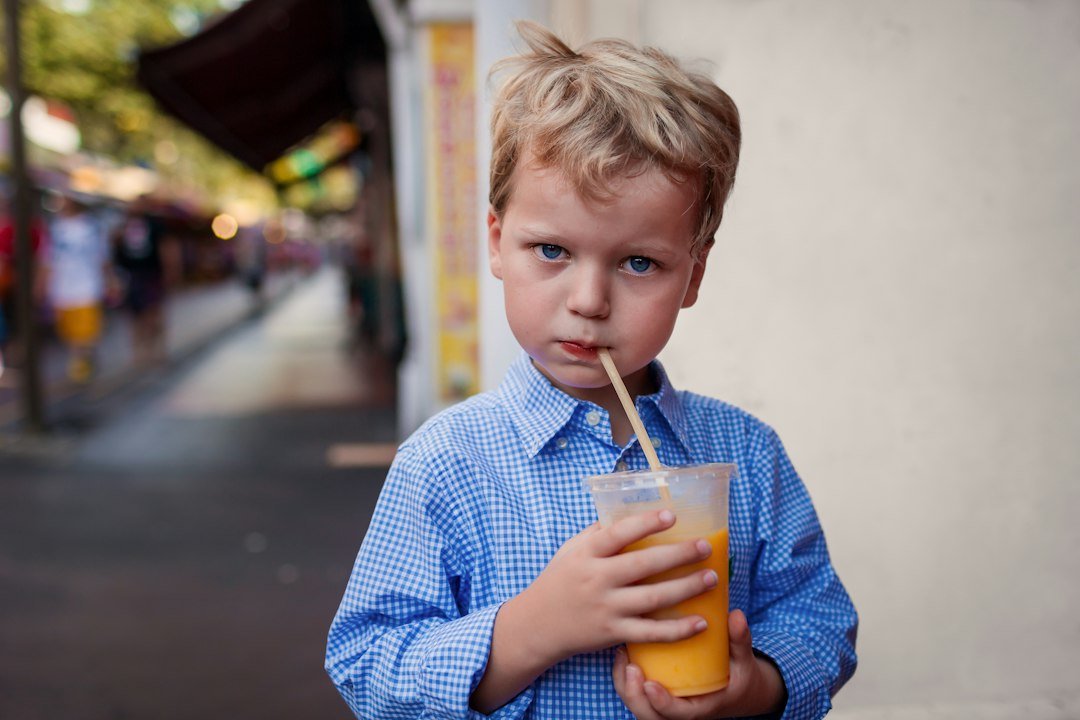
As a food, sea buckthorn is generally fine for healthy children over 1 year old: a few berries, a little diluted juice or jam within normal juice limits. As a supplement (capsules, concentrated oil, extracts), there is no established safe dose for children, and research in kids is very limited. Don't give children adult capsules unless their pediatrician agrees, and give no juice or supplements to babies under 12 months.
- Food amounts of sea buckthorn (berries, diluted juice, jam) are a different thing from supplement doses.
- The American Academy of Pediatrics advises no fruit juice for babies under 12 months and limits juice for older children.
- Only a handful of small studies have tested sea buckthorn in children, so safe supplement doses for kids are unknown.
- Whole berries are small and round, a choking risk for children under 4 unless mashed or cut.
- Always ask your child's doctor before starting any supplement, especially if they take medicine or have a health condition.
Food vs supplement: why it matters
When parents ask whether sea buckthorn is safe for kids, the honest answer depends on how it's given. Sea buckthorn berries, juice, jam and syrup have long been part of family diets in countries such as Finland, Russia, Mongolia and China, and the berry has even been used in studies of how children aged 9–11 accept sour juices [1].
Supplements are different. Capsules and concentrated oils deliver far more of the berry's active compounds than food does, and dosages on the label are set for adults. The NIH's National Center for Complementary and Integrative Health warns that “natural” products aren't automatically safe for children, that supplements can interact with medicines, and that parents should talk to their child's healthcare provider about any supplement [2].
Sea buckthorn for kids by age
| Age | As food | As a supplement |
|---|---|---|
| Under 12 months | No juice. The AAP recommends no fruit juice for babies under 1 year [3] | Don't give |
| 1–3 years | A little diluted juice, counted within the AAP's limit of up to 4 oz (120 mL) of juice a day. Mash or cut berries | Only if a pediatrician recommends it |
| 4–6 years | Diluted juice within 4–6 oz of total juice a day; berries cut in half until age 4 | Only with a pediatrician's advice |
| 7–18 years | Juice within 8 oz of total juice a day; berries, jam and smoothies | Ask the doctor; no established child dose |
Juice limits refer to all fruit juice combined, not sea buckthorn alone. Pure sea buckthorn juice is extremely sour, so most children will drink it only well diluted or blended with sweeter fruit.
Which forms are suitable for kids?
- Diluted juice or puree: the most food-like option. Mix a small amount into water, apple juice or a smoothie. See our juice guide.
- Berries: fine for older children who like sour fruit. Cut or mash them for under-4s.
- Powder: treat it like a strong-tasting fruit powder; a pinch in yogurt or oatmeal rather than an adult serving. See our powder guide.
- Capsules and concentrated oil: adult doses. Don't give them to children without medical advice. Softgels can also be a choking hazard for young children.
- Gummies: keep any supplement gummies out of reach, because children may treat them as sweets.
Store supplements safely. NCCIH reports that thousands of children visit emergency rooms every year after taking supplements unsupervised [2]. Keep all supplements, including sea buckthorn capsules and gummies, locked away or out of reach.
What research in children shows
Only a few studies have given sea buckthorn to children, and they're small:
- Functional dyspepsia: a Chinese study randomly assigned 120 children with functional dyspepsia to sea buckthorn, a standard drug or both for 8 weeks. Sea buckthorn groups had faster stomach emptying and higher appetite-related hormones [4]. It was a single study and needs confirmation.
- Type 1 diabetes: in 30 children with type 1 diabetes, a blueberry and sea buckthorn concentrate for 2 months was linked to better antioxidant markers and lower HbA1c [5]. The study was small and short, and the product wasn't sea buckthorn alone.
Neither study tells us a safe everyday supplement dose for healthy children. Any child with diabetes or a digestive condition should only try sea buckthorn under their specialist's supervision.
Risks and when to avoid it
Ask your child's doctor first if your child:
- takes any regular medicine, especially for diabetes, blood clotting or blood pressure
- has a bleeding disorder or is due to have surgery
- has food allergies, particularly to other fruits or pollen
- has a chronic condition such as diabetes, kidney or liver disease
Other possible problems:
- Tummy upset: the acidity can cause stomach ache or loose stools. Start with small amounts.
- Tooth enamel: sour juice can wear enamel; serve it with meals and offer water afterwards.
- Allergic reactions: rare, but stop and seek help if you see hives, swelling or breathing problems.
Adult safety information applies too. See sea buckthorn side effects, interactions and who should avoid it.
Using sea buckthorn oil on children's skin
Sea buckthorn oil is used in some baby and family skincare products. If you want to try it on a child's dry skin:
- Choose a product made for children, or dilute pure oil well in a gentle carrier oil.
- Patch test on a small area of the inner arm and wait 48 hours.
- Avoid broken skin, the eyes and the diaper area unless a doctor suggests it.
- Expect orange staining on clothes and bedding from pulp oil.
For eczema, talk to your doctor before relying on any oil. A systematic review rated sea buckthorn oil supplements for eczema as only preliminary evidence [6].
Frequently asked questions
Can kids take sea buckthorn?
Healthy children over 1 can usually have sea buckthorn as food, such as diluted juice or berries, within normal juice limits. Supplements like capsules and concentrated oil have no established safe dose for children, so only give them with a pediatrician's advice.
Can I give sea buckthorn juice to my toddler?
For children aged 1–3, a small amount of well-diluted juice can count towards the American Academy of Pediatrics' limit of up to 4 oz of fruit juice a day. Don't give juice to babies under 12 months.
What is a safe sea buckthorn dose for a 12-year-old?
There isn't an established supplement dose for children of any age. Food amounts such as juice within 8 oz of total fruit juice a day are generally fine for healthy teens. For capsules, ask your child's doctor.
Is sea buckthorn oil safe for babies?
Don't give sea buckthorn oil or supplements to babies by mouth. For skin, use only products designed for babies, patch test first, and ask your pediatrician, especially for eczema.
Can sea buckthorn help my child's immunity?
There's no good evidence in children that sea buckthorn boosts immunity. A varied diet with plenty of fruit and vegetables matters far more than any single supplement.
Are sea buckthorn gummies safe for children?
Only if the product is made and labeled for children and their doctor agrees. Keep all gummies out of reach, as children may eat them like sweets.
- Quinine sensitivity influences the acceptance of sea-buckthorn and grapefruit juices in 9- to 11-year-old children. Appetite. 2014. PubMed
- National Center for Complementary and Integrative Health. 10 Things To Know About Dietary Supplements for Children and Teens. nccih.nih.gov
- American Academy of Pediatrics. AAP Recommends No Fruit Juice for Children Under 1 Year. healthychildren.org
- Xiao M, et al. Influence of Hippophae rhamnoides on two appetite factors, gastric emptying and metabolic parameters, in children with functional dyspepsia. Hell J Nucl Med. 2013;16(1):38-43. PubMed
- Nemes-Nagy E, et al. Effect of a dietary supplement containing blueberry and sea buckthorn concentrate on antioxidant capacity in type 1 diabetic children. Acta Physiol Hung. 2008;95(4):383-93. PubMed
- Reynolds KA, et al. The role of oral vitamins and supplements in the management of atopic dermatitis: a systematic review. Int J Dermatol. 2019;58(12):1371-6. PubMed
This article is for general information only and is not medical advice. Always talk to your child's doctor before giving them any supplement.