How to Grow Sea Buckthorn (Seaberry) in the US: Zones, Planting & Harvest
Everything a US gardener needs: which zones it grows in, why you need male and female plants, the best varieties, planting and care, and how to harvest those famously stubborn berries.

Sea buckthorn, sold by US nurseries as seaberry, grows in USDA zones 3–8 and is cold-hardy to about −40°F. Plant it in full sun and well-drained soil (pH 5.5–7.5). The plants are either male or female, so you need one male for every 6–8 females to get berries. Expect your first harvest in 2–3 years, from late July to September depending on the variety.
- Best suited to northern and mountain states. Zones 9 and warmer are outside its usual range.
- Only female plants bear fruit, and they need a male nearby. Buy named female varieties plus a male pollinator such as 'Pollmix'.
- It needs full sun. In one Wisconsin planting, bushes with less than half a day of sun died within two years.
- Don't feed it nitrogen. It makes its own through root nodules, and nitrogen fertilizer can harm them.
- All plants are thorny, and the berries cling tightly. Many growers cut fruiting branches, freeze them and shake the berries off.
- It isn't native to North America and can spread in sandy soils. Check your state's invasive plant list before planting.
Is sea buckthorn right for your yard?
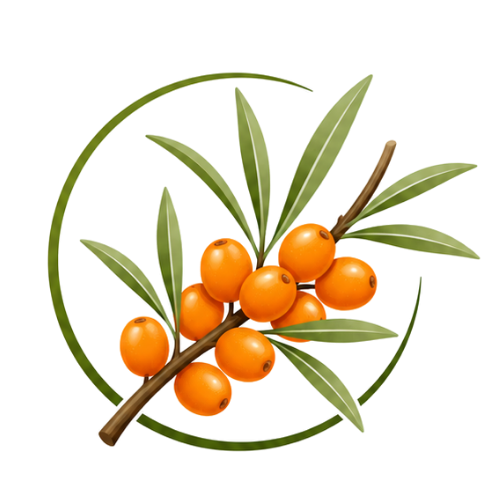
Sea buckthorn (Hippophae rhamnoides) is a tough, thorny shrub from Europe and Asia with silvery leaves and masses of bright orange berries. It thrives on poor, sandy and even salty soil where little else grows [2]. Here's what to expect:
| Need | Details |
|---|---|
| Hardiness | USDA zones 3–8; cold-hardy to about −40°F [1] |
| Sun | Full sun. Shaded plants decline and die [1] |
| Soil | Any texture with good drainage, pH 5.5–7.5. Avoid soggy ground [1] |
| Size | Usually a multi-stemmed shrub 6–15 ft tall; can reach tree size if left alone [1] |
| Pollination | Separate male and female plants, pollinated by wind |
| First harvest | 2–3 years after planting [1] |
| Watch out for | Sharp thorns, possible suckering, deer browsing |
Where it grows in the US
Most sources put sea buckthorn in zones 3–8, and Oregon State University and Cornell list it as hardy to zone 3 or 4 [1][2]. That makes it a good fit for:
- The upper Midwest and Great Plains, such as Minnesota, Wisconsin, the Dakotas, Montana and Nebraska
- The Mountain West, including Colorado, Wyoming, Idaho and Utah
- New England, New York and the northern Mid-Atlantic
- The Pacific Northwest and Alaska's milder areas
It's less suited to the Deep South, Florida, the Gulf Coast and low-desert Southwest, which fall in zones 9 and warmer. Look up your zone on the USDA Plant Hardiness Zone Map.
Male and female plants
Sea buckthorn is dioecious: each plant is either male or female, and only females bear berries. Pollen travels on the wind, so bees aren't needed, but a male must be close by.
- Ratio: plant about 1 male for every 6–8 females, spread evenly [1]. One 'Pollmix' male can pollinate up to 6 females [3]. In a small yard, many growers simply plant 1 male with 2–4 females.
- Placement: put the male upwind of the females, based on your prevailing wind.
- Telling them apart: once plants are old enough to flower, male flower buds are larger and cone-shaped, while female buds are smaller and rounder [6]. Young seedlings can't be sexed by looking at them.
Buy named varieties, not unlabeled seedlings. Named plants are grown from cuttings, so you know which are female and which are male. Seedlings are a gamble: you may wait years to find out you have all males.
Best varieties for US gardens
The University of Wisconsin's uncommon fruit project grew several varieties side by side for over a decade. Their notes are a useful guide [1]:
| Variety | Origin | Ripens (Wisconsin) | Notes |
|---|---|---|---|
| 'Titan' | Russia | Late Aug–early Sept | Large, bright orange, less tart; easier to pick by hand. Very productive |
| 'Star of Altai' | Russia | Late July–early Aug | Earliest and sweeter; smaller plant |
| 'Garden's Gift' | Russia | Late Aug | Abundant, dark orange, aromatic fruit |
| 'Leikora' | Germany | Early–mid Sept | Very tart. Lower branches shade out without pruning |
| 'Hergo' | Germany | Mid–late Sept | Densely fruited, tart and juicy; hard to pick by hand |
| 'Pollmix' | Germany | Male | Pollinator, traditionally paired with 'Leikora' |
For eating fresh, the sweeter Russian types such as 'Star of Altai' and 'Titan' are the friendliest. For juice, jam and cooking, tart German types work well. Choose a male that flowers at the same time as your females; nurseries usually say which pairs go together.
How to plant sea buckthorn
- Pick the spot: full sun all day, good drainage, and away from paths, since the thorns are sharp. A hedge or windbreak is a classic use.
- Time it: plant in spring after the ground thaws, or in early fall so roots establish before winter.
- Space it: plants commonly reach 6–15 ft wide, so give each one room. For easy picking, many growers keep bushes pruned to about 6 ft tall [1].
- Prepare the hole: dig as deep as the root ball and twice as wide. No compost-rich backfill is needed; it's adapted to poor soil.
- Water in well and keep the soil evenly moist for the first season. Young plants need steady moisture, while established plants are drought tolerant [1].
- Mulch around, but not touching, the stems to hold moisture and keep weeds down.
Care: water, feeding, pruning and pests
Feeding
Sea buckthorn partners with soil bacteria (Frankia) in root nodules that pull nitrogen from the air [2]. Skip nitrogen fertilizer, which can harm root nodules. A little phosphorus may help on soils that are low in it [1].
Pruning
Remove dead, crossing and shaded lower branches in late winter. Keeping plants to about 6 ft makes picking easier and helps light reach the lower branches. Berries form mostly on the previous year's growth, so don't cut everything back at once.
Pests and problems
- Japanese beetles like the leaves in summer [1].
- Deer browse young plants; protect them with fencing or cages.
- Suckers: some plants send up shoots from the roots, especially in light soils. Mow or cut them out, or use a root barrier [1][2].
Check whether it's invasive where you live. Sea buckthorn isn't native to North America [4]. It has spread in parts of the Canadian prairies and the British Isles, where it can crowd out native plants [2], and invasive-species databases track it in the US [5]. Before planting, check your state's noxious weed list or ask your local cooperative extension office.
How to harvest the berries
This is the hard part. Sea buckthorn berries have no natural “break point”, so they cling tightly to thorny branches and burst when squeezed [1]. Depending on the variety, they ripen from late July to September and can hang on the bush into winter [2].
- Hand picking: wear thick gloves and pick into a bowl. Easier with large-fruited varieties like 'Titan'.
- Cut, freeze, shake: cut fruiting branches (this also does your pruning), freeze them overnight, then shake or roll the frozen berries off. German orchards harvest 'Hergo' this way [1]. Cut only part of each bush per year so it keeps fruiting.
- After a frost: some growers wait until after the first hard freeze, when berries come off a little more easily.
Freeze berries in bags for later use. For juice, press them cold rather than heating them, which gives off flavors [1]. Then see how to eat sea buckthorn berries and our juice guide.
Growing from seed
You can grow sea buckthorn from seed, but you won't know which seedlings are male or female until they flower, which takes several years. Many growers give seeds a few weeks of cold, moist storage in the fridge before sowing. Keep seedlings moist and in full sun. If you want fruit sooner and a reliable male-to-female mix, buy named plants instead.
Where to buy sea buckthorn plants in the US
Look for “seaberry” at specialty fruit nurseries. For example, Raintree Nursery in Washington and One Green World in Oregon list named female varieties and male pollinators, sometimes as bundles. Stock sells out, so check early in the season. Local nurseries in the northern states sometimes carry it too. For berries, juice, oil and capsules instead, see where to buy sea buckthorn in the USA.
Frequently asked questions
What zone does sea buckthorn grow in?
Usually USDA zones 3 to 8. It is cold-hardy to about -40°F and grows best in northern and mountain states. Zones 9 and warmer are outside its usual range.
Do I need a male and female sea buckthorn?
Yes. Only female plants produce berries, and they need pollen from a male plant nearby. Plant about one male for every 6 to 8 females, or one male with 2 to 4 females in a small garden.
How long until sea buckthorn produces fruit?
Usually 2 to 3 years after planting named varieties. Seedlings can take longer, and you will not know if they are female until they flower.
Is sea buckthorn invasive?
It can be. It is not native to North America and has spread in parts of Canada and the British Isles, especially on sandy soils. Check your state noxious weed list or local extension office before planting.
Can sea buckthorn grow in shade?
No. It needs full sun. In a Wisconsin planting, bushes with less than half a day of sun died or were dying within two years.
How do you harvest sea buckthorn berries?
Pick by hand with thick gloves, or cut fruiting branches, freeze them and shake the frozen berries off. The berries cling tightly, so this is the hardest part of growing seaberry.
Is seaberry the same as sea buckthorn?
Yes. Seaberry is a common US nursery name for sea buckthorn, Hippophae rhamnoides.
- University of Wisconsin–Madison, Center for Integrated Agricultural Systems. Uncommon Fruits: Seaberry (sea buckthorn). uncommonfruit.cias.wisc.edu
- Oregon State University. Landscape Plants: Hippophae rhamnoides. landscapeplants.oregonstate.edu
- University of Connecticut Plant Database. Hippophae rhamnoides. plantdatabase.uconn.edu
- USDA Natural Resources Conservation Service. PLANTS Database: Hippophae rhamnoides. plants.usda.gov
- EDDMapS, University of Georgia Center for Invasive Species and Ecosystem Health. Sea buckthorn. eddmaps.org
- Trees and Shrubs Online. Hippophae rhamnoides. treesandshrubsonline.org
Growing conditions vary by region. Check with your local cooperative extension office about planting non-native species in your area.